

Photographing Your Neurodivergent Child: A Practical Guide for Parents
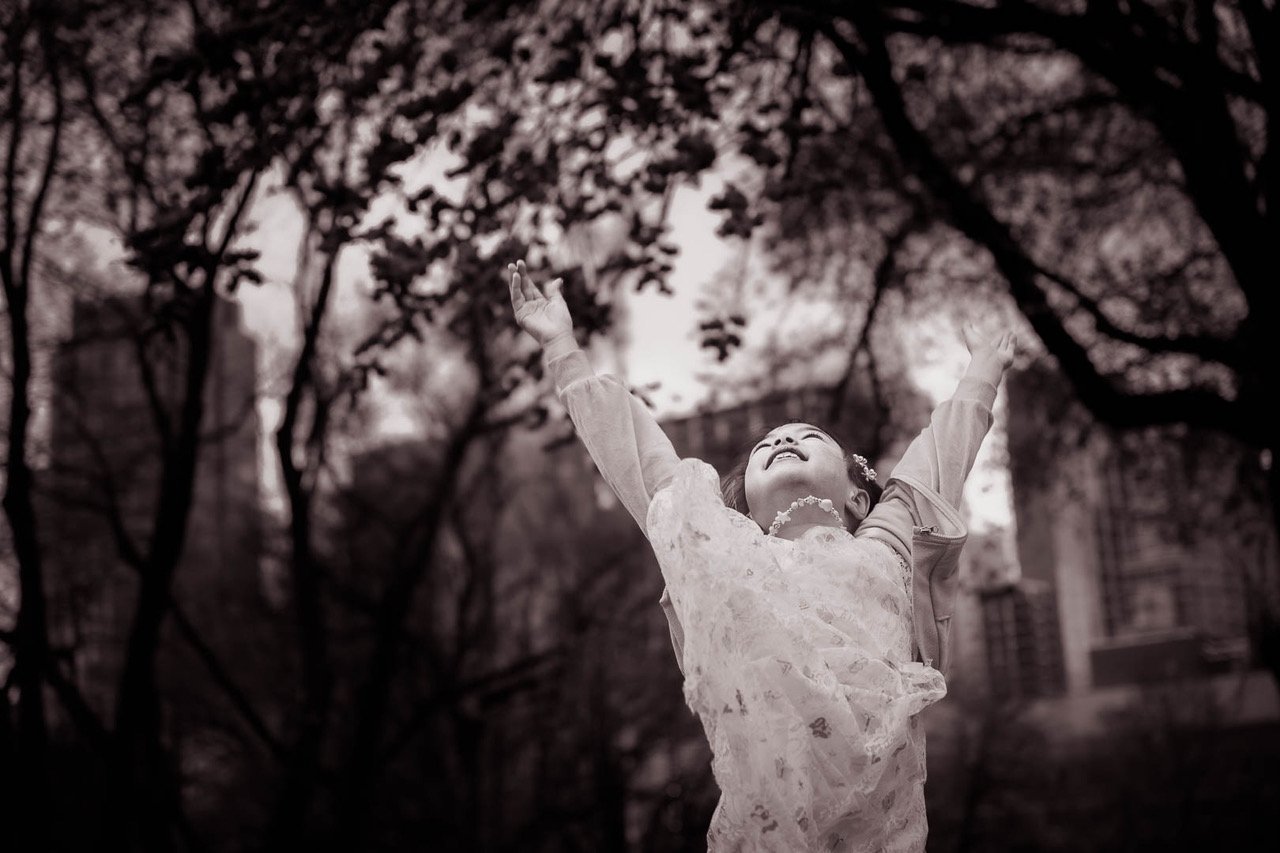
Everything you need to know before, during, and after a photography session, organized around the questions parents actually ask.
April 2026, by Meredith’s Husband
An interview with family photographer Meredith Zinner, covering stages of the photography experience, from choosing the right photographer to what the final images should look like.
Booking a photography session when you have a neurodivergent child involves a different set of considerations than it does for other families. You have probably wondered whether it is even worth trying. Whether your child will cooperate. Whether a photographer will understand. Whether you will end up with anything usable.
The short answer is yes. When you choose the right photographer and approach the session the right way, you will likely end up with images that surprise you. We put these questions to Meredith Zinner, a New York-based family photographer who has spent more than two decades working with children across the full spectrum of neurodivergency. Her answers are woven throughout this guide.
In this article
- Before you start looking: managing your own expectations
- How to find the right photographer
- Questions to ask before you book
- What to tell the photographer before the session
- How to prepare your child for the session
- What to bring
- During the session: what your job is
- What to expect from the images
- A note on printed albums
Before you start looking: managing your own expectations
The biggest single factor in how a session goes is how much pressure you bring into it. Parents of neurodivergent children often arrive carrying years of anxiety about how their child will be perceived, and that anxiety transmits directly to the child before the session even begins.
Many parents worry their child will simply be too much. Meredith hears this regularly, and her response is consistent.
"When you say they are too much, could you explain what it is about them that you feel is too much? Because whoever they are when they show up, that is who they should be photographed as. I never want anyone to look at their photos and not recognize themselves or their family."
Meredith ZinnerThe goal of the session is not perfect family portraits. It is authentic documentation of who your child and your family actually are. Those are different things, and the second one is more valuable.
How to find the right photographer
Start with their work, not their credentials
Look at a photographer's portfolio before you contact them. Ask yourself whether the children in these images are genuinely happy or performing happiness. Do they look like themselves? Does something in the images move you?
"I always advise parents to first look at the work of a photographer and make sure that they are moved by it. There are so many wonderful photographers. It is really a matter of whose work speaks to you and feels like home."
Meredith ZinnerA portfolio full of uniformly posed, smiling children looking directly at the camera should make you cautious. It suggests the photographer's technique depends on children conforming to a standard. Neurodivergent children often cannot or will not do this, and a photographer who relies on compliance will struggle.
Have a real conversation before booking
Call or video chat with the photographer before you commit to anything. Pay attention to how you feel during the conversation. Do they make you feel at ease? Do they ask about your child, or do they focus entirely on their own process?
"I always advise speaking on the phone or having a Zoom call with the photographer so you can really sense their energy, whether you click, whether they are funny. You want somebody who makes you feel safe, seen, comfortable, at ease."
Meredith ZinnerThe one red flag that matters most
Photographers who require children to perform, who prompt smiles, or who run the same fixed sequence every session are not the right fit for neurodivergent children. Meredith describes a session approach she witnessed that captures exactly what to avoid.
"There are some photographers who lead their sessions saying, just keep pretending that this is your best day ever. And if I see you losing focus, you will hear me repeat, best day ever, best day ever. I feel that is completely inauthentic. One of the most telling signs is whether the kids are fake smiling or genuinely laughing."
Meredith ZinnerIf every session in a photographer's portfolio looks the same, they are running a template. Your child cannot be fit into a template.
Questions to ask before you book
Use this list in your first conversation with any photographer you are considering.
- Why did you choose this as your career?
- How do you approach sessions when a child is not responding to direction?
- What does your session look like when things go differently than expected?
- Do you use flash?
- What do you ask parents in your pre-session questionnaire?
- Can I see examples of sessions where children were not posing or making eye contact?
- How do you help a child feel comfortable before the camera appears?
- What do you consider a successful session?
Meredith's answer to the most important question on that list is worth noting. When asked what single question every parent should ask a photographer before booking, she did not hesitate.
"Why have you chosen this as your career? That gets to the why."
Meredith ZinnerWhat to tell the photographer before the session
Share your child's sensitivities
Tell the photographer what specifically affects your child: sensitivity to flash or bright light, difficulty with unfamiliar sounds, strong preferences around touch or physical proximity, specific triggers. This allows the photographer to arrive prepared rather than discovering these things mid-session.
Meredith includes a dedicated space for this in her pre-session questionnaire.
"I always ask, does your child have any sensitivities that I should be aware of? Is there anything else you would like to add? I find that is generally the place where parents will add any of that information if it is pertinent."
Meredith ZinnerShare what your child loves
The photographer's best tool for connecting with your child is your child's own interests. Tell them what your child is currently obsessed with, what makes them laugh, and what they could do for hours without prompting. These interests are not distractions from the session. They are the session.
Confirm pronouns and preferences
A good photographer will ask for this directly. Meredith makes it the first question on her questionnaire.
"I always want to know what pronoun the child goes by and wishes to be identified as."
Meredith ZinnerHow to prepare your child for the session
Keep the framing low-key
Do not tell your child a photographer is coming to take their picture. Meredith recommends something much simpler.
"I tell the parent to tell the kids, on the day of the session: just so you know, my friend Meredith is a photographer and she is going to come by. She will probably bring her cameras, but she is not going to photograph you. I do not even know if she is even going to use the cameras. She is just my friend. And so that is all they know."
Meredith ZinnerThis removes performance expectation before the day begins. When your friend arrives and you greet her warmly, your child receives immediate social proof that she is safe.
Do not change the morning routine
Any deviation from normal signals to your child that something unusual is happening. Keep the morning as ordinary as possible: familiar breakfast, familiar routine, no new outfit introduced with fanfare. The photographer's arrival should feel like a natural extension of a normal day.
Prioritize sleep
A well-rested child has substantially more capacity for novelty, stress, and sustained engagement. If you can schedule the session for the time of day when your child is typically most regulated, do that.
What to bring
Comfort objects and favorite things
Bring whatever your child loves. Stuffed animals, a preferred toy, a book they are currently absorbed in. Meredith is clear that she never brings her own props or comfort items.
"I would never bring any of those because I do not know what they are. But I encourage kids just to show me what they love. If there is a book that they love, if there is a stuffy that they love, whatever they are interested in, I am interested in."
Meredith ZinnerComfortable clothing
Let your child wear what feels good. For children with tactile sensitivities, an uncomfortable outfit will be a source of distraction and dysregulation throughout the session. Comfortable children photograph better.
During the session: what your job is
Do not prompt your child to smile
This is the single most important thing. When a child is prompted to smile during a session that already carries some performance pressure, they produce the expression every parent recognizes: the pained, wide-eyed grimace that looks nothing like an actual smile.
"I definitely encourage parents not to make their children smile. When kids are forced to smile, it often means they feel, oh, I am not accepted for who I am. I have to perform this certain ritual so that my parent will be happy with me. I really encourage parents to let their kids be kids."
Meredith ZinnerDo not apologize for your child's behavior
Nothing your child does during a session requires an apology. A child who runs, spins, hides, goes quiet, or wants to look at their toys instead of the camera is giving the photographer exactly what they need: a child being themselves.
"Kids are kids. There is nothing for parents to ever feel embarrassed about. Nobody can do anything wrong."
Meredith ZinnerBe genuinely present
The best family images happen when parents are fully absorbed in their children rather than monitoring the session. Play with your child. Read to them. Hold them. Have the conversation you would have if no one were watching. The photographer will find those moments. Your job is to make them available.
If your child needs comfort, provide it
If your child falls, gets startled, or becomes upset, go to them immediately. Do not apologize or try to redirect quickly back to the session.
"Sometimes kids will run and trip and fall and scrape themselves. And sometimes initially the parents are like, oh, do not photograph this. But my take is always that I am going to photograph it so you have the choice to look back on it should you wish to. What we would be denying otherwise is the experience of the child being cared for."
Meredith ZinnerWhat to expect from the images
They may look different from traditional portraits
Images from a neurodivergent-friendly session are likely to include motion, non-camera-facing expressions, children absorbed in their own world, and moments of genuine rather than performed emotion. This is not a failure of the session. It is evidence that the session worked.
The images will look like your child
Not a dressed-up, performing version of your child. Your child. Meredith describes her selection process simply.
"If the photo makes me think, oh my gosh, that is so them, or that kid is so happy, or that glance that the mom did. Moments that tell their story visually, that have an emotional weight that will bring them back to this moment so they can live it over and over again."
Meredith ZinnerWhy it matters that photographs are not edited to look neurotypical
Editing decisions are ethical decisions. A photographer who removes evidence of stimming, or selects only the moments when a child looks most neurotypical, is not documenting that child. They are replacing that child with a version their parents are supposed to prefer. When you view the final gallery, look for evidence that the photographer has kept the full child: the expressions, the movements, the postures that make your child uniquely themselves.
A note on printed albums
Digital galleries are convenient, but printed albums are lasting. Meredith feels strongly about this, and it shapes how she delivers her work to every family.
"I like kids to know that they have and can now hold their story, their beginnings, their early beginnings, teens, and into adulthood. That they have a mirror and documentation and celebration of who they were in that moment. The world is hard enough as it is. If I can leave families and kids with a sense of joy and ownership and authenticity, with proof that their parents thought it was important to show them how much they were loved and celebrated and accepted, and that they were seen for who they were, and there is proof of that to always go back to, that is not a small thing."
Meredith Zinner